
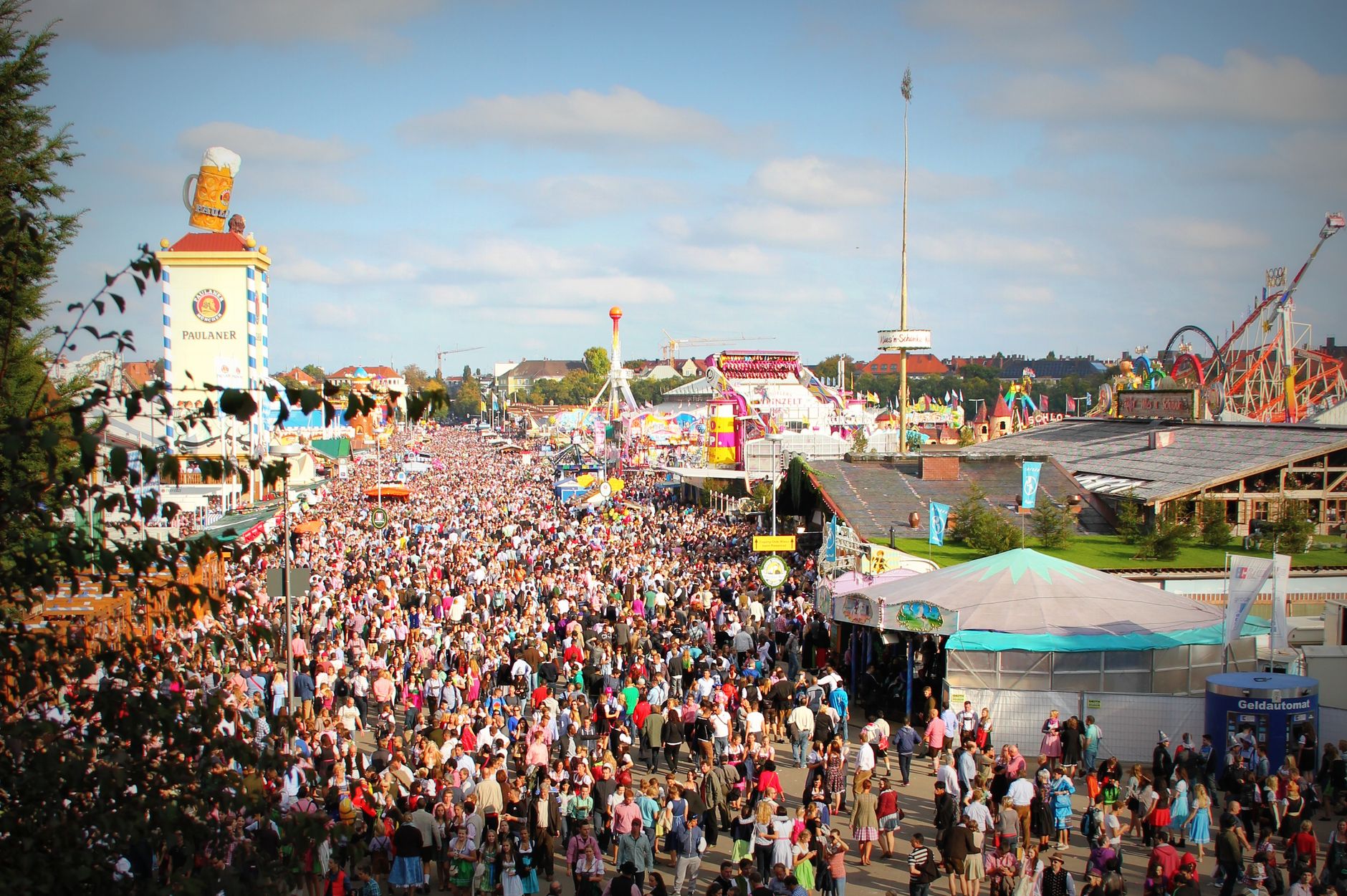
If you imagine Oktoberfest as one enormous beer party, Munich has a much bigger surprise waiting. Beyond the famous tents, the festival brings together live music, Bavarian food, colourful parades and an entire fairground filled with rides. It is joyful, energetic and a little overwhelming on your first visit.
Oktoberfest 2026 will take place at Munich’s Theresienwiese from 19 September to 4 October 2026. Entry is free, but choosing the right day, understanding how the tents work and planning your budget can completely change your experience. This guide covers everything you need to know before you go.
Oktoberfest 2026 at a Glance
Oktoberfest 2026 will run for 16 days, beginning with the ceremonial keg tapping on Saturday, 19 September and ending on Sunday, 4 October. The festival takes place at Theresienwiese, a large event ground close to central Munich that locals often refer to simply as the “Wiesn.”
Although the festival is free to enter, there are separate costs for food, drinks, rides and the historical Oide Wiesn area. The key details below will help you understand the basic timings and costs before moving into the practical planning sections.
| Essential information | Oktoberfest 2026 details |
|---|---|
| Official dates | 19 September to 4 October 2026 |
| Location | Theresienwiese, Munich, Germany |
| Opening Ceremony | 19 September at 12 noon |
| General Admission | Free |
| Oide Wiesn admission | €4 |
| Beer prices | €14.80 to €15.90 per litre |
| Main tent hours | 10 am to 11:30 pm on weekdays; 9 am to 11:30 pm on weekends |
| Best time for first-timers | A weekday morning or afternoon |
| Closest station | Theresienwiese on the U4 and U5 lines |
The opening ceremony takes place inside the Schottenhamel tent, where Munich’s mayor taps the first keg and declares “O’zapft is!” Only after that moment can beer service officially begin across the festival. You can check the latest information on the official Oktoberfest website and confirm the daily schedule through the official Oktoberfest opening-hours guide.
What Is Oktoberfest Really Like?
Oktoberfest began in 1810 as a celebration of the marriage of Crown Prince Ludwig and Princess Therese. More than two centuries later, it has become the world’s largest folk festival, welcoming visitors from Munich and far beyond.
Once you enter the grounds, it feels more like a vast carnival than a single event. Enormous decorated tents line the streets alongside food stalls, roller coasters, traditional games and souvenir stands. Inside the tents, thousands of visitors sit together at long communal tables while live bands move from Bavarian music to familiar international songs.
You may arrive with your own group, but sharing a table and talking to people from different countries is part of the experience. This social atmosphere is what makes Oktoberfest feel very different from simply visiting a large bar or beer hall.
When Is the Best Time to Visit Oktoberfest 2026?
For most first-time visitors, a weekday before late afternoon is the best choice. The tents are easier to enter, finding an unreserved seat is more realistic and the grounds feel less overwhelming. You will also have more space to explore the rides and food stalls before the evening crowd arrives.
However, there is no single perfect time for everyone. Opening weekend is best for major traditions, weekday afternoons offer a balanced first experience and evenings deliver the loudest party atmosphere. Before choosing your date, decide whether your priority is cultural events, easier tent access, family-friendly activities or the full evening celebration.
Visit the Opening Weekend for Tradition
The festival opens on Saturday, 19 September, when the first keg is tapped at noon inside the Schottenhamel tent. The traditional costume and hunters’ parade follows on Sunday, 20 September, bringing decorated carriages, marching bands and traditional groups through Munich.
The opening weekend offers some of the festival’s most iconic moments, but it also attracts enormous crowds. Choose it for the ceremony and spectacle, not because you expect a relaxed introduction to Oktoberfest.
Choose a Weekday for a More Relaxed Visit
Arriving between 10 am and 2 pm from Monday to Friday gives you the best chance of entering popular tents without a reservation. Mornings begin with a more traditional mood, while the music and crowd gradually become livelier through the afternoon. You can therefore see both sides of Oktoberfest without beginning your visit in the middle of the evening rush.
Families can consider visiting on 22 or 29 September, the official Family Days for Oktoberfest 2026. Weekends and 3 October, which is German Unity Day, are likely to be much more crowded.
Visit in the Evening for the Biggest Party Atmosphere
Evenings bring louder music, fuller tents and the energetic atmosphere many travellers associate with Oktoberfest. They can be great fun, but spontaneous entry becomes much less predictable, particularly on Fridays and Saturdays. If an evening celebration is important to you, reserve a table or enter your preferred tent earlier and remain there.

Do You Need Tickets for Oktoberfest 2026?
You do not need a ticket to enter the main Oktoberfest grounds or its large beer tents. General admission is completely free. The separate historical area known as Oide Wiesn charges an entry fee of €4 and offers traditional rides, music and a calmer old-Munich atmosphere.
A beer tent reservation is not compulsory. According to the official Oktoberfest reservation guide, at least 25 percent of seats in most large tents remain unreserved. On weekends and public holidays, 40 percent remain reservation-free until 3 pm, after which the share returns to 25 percent.
Reservations are most useful for larger groups or busy evening sessions. They are normally made for a table of eight to ten people and require prepaid food and drink vouchers. The reservation itself is not an expensive admission ticket, but the required vouchers create a minimum spend for the table.
How Walk-In Seating Works
If you are visiting without a reservation, arrive early and head directly to the tent you most want to experience. Look for tables marked as unreserved or politely ask a server where you may sit. You may be able to join a partially occupied table, which is completely normal at Oktoberfest.
Entering a tent does not always guarantee that you will find a seat, and most table service is intended for seated guests. If a tent closes temporarily because it has reached capacity, explore another tent or the fairground rather than waiting indefinitely at the entrance.
Only book through the individual tent’s website or the official resale portal. Unofficial sellers may charge heavily inflated prices for reservations that can later be cancelled or rejected.
Best Oktoberfest Tents for First-Time Visitors
Each tent has its own food, décor, music and personality. Rather than rushing between them, choose one main tent that matches the atmosphere you want and treat any additional tent as a bonus. You can also compare the full selection using the official Oktoberfest tent directory.
The “best” tent is therefore less about a universal ranking and more about the experience you want. Some tents are deeply traditional, some attract an international crowd and others are known for food, late-night service or a particularly striking interior. First-time visitors will usually enjoy the festival more by spending meaningful time in one suitable tent rather than collecting quick visits to several.
Augustiner-Festhalle: Best for Tradition
Augustiner beer is served from traditional wooden barrels, which helps the tent preserve a distinctly Bavarian character. The mood is warm and convivial, with a strong mix of locals and visitors. Choose it if authenticity matters more to you than finding the loudest international party.
Hacker-Festzelt: Best for a Lively First Visit
Hacker is instantly recognisable from its bright “Bavarian Heaven” ceiling, painted with clouds and stars. As the day progresses, the live music and crowd become increasingly energetic. It is a good first choice if you want the classic images, shared singing and celebratory atmosphere people associate with Oktoberfest.
Hofbräu-Festzelt: Best for Meeting International Visitors
Hofbräu is one of the largest and most internationally popular tents. It feels highly social, so meeting travellers from around the world is almost unavoidable. Its standing area also makes it more approachable for visitors who have not secured a traditional table, although it can become extremely busy later in the day.
Schottenhamel: Best for Oktoberfest History
Schottenhamel holds a special place in the festival because the official opening ceremony and first keg tapping take place here. It has a youthful and energetic atmosphere after the ceremony, but opening day is one of the hardest times to get inside. Visit later in the festival if you want to experience the tent without competing with the opening-day crowd.
Käfer Wiesn-Schänke: Best for a Later Evening
Käfer feels smaller and more refined than the vast brewery tents, with an intimate lodge-style interior and a food-focused menu. It is also popular with celebrities and visitors looking for a more polished evening. Käfer can remain open until 1 am, making it useful when the main tents have already ended service.
How Much Does Oktoberfest Cost in 2026?
Entry may be free, but food, drinks and rides can quickly add up. The official beer price for Oktoberfest 2026 ranges from €14.80 to €15.90 for one litre, depending on the tent. Remember to leave room for a tip when planning your spending.
Your final budget will depend less on admission and more on how long you stay and what you do once you arrive. A visitor who explores the grounds, eats one meal and enjoys a single ride will spend considerably less than someone who orders several drinks, buys souvenirs and spends the entire day moving between attractions.
| Expense | Estimated Cost |
|---|---|
| Festival entry | Free |
| Oide Wiesn entry | €4 |
| One litre of beer | €14.80 to €15.90 |
| Main meal | €15 to €30 |
| Snack or dessert | €5 to €10 |
| One fairground ride | Approximately €5 to €12 |
| Comfortable one-day budget | Approximately €80 to €120 |
A budget of around €80 can cover a main meal, two drinks, a snack and one or two rides if you spend carefully. A more flexible budget of €120 gives you room for additional food, attractions or a small souvenir without constantly calculating every purchase.
Oktoberfest beer is served in a one-litre mug known as a Maß, so each order is larger and stronger than a standard glass of beer. Pace yourself, drink water between servings and remember that service is not automatically included in the listed price. Carry some cash because card acceptance can vary between tents and individual stalls.

How to Plan Your Oktoberfest 2026 Trip?
Two or three nights in Munich work well for a first Oktoberfest trip. This gives you one full festival day without forcing you to arrive directly from a flight or train, followed by enough time to explore Marienplatz, Viktualienmarkt and the English Garden.
Hotels around Theresienwiese and Munich Central Station offer the easiest journey, but prices rise sharply during the festival. Better value can often be found around Sendling, Schwanthalerhöhe or elsewhere along the U4 and U5 lines. A hotel that is 15 or 20 minutes away by underground can be a much better decision than paying heavily for walking distance.
Book accommodation as early as possible and choose a refundable rate if your travel plans are not final. If central hotels are already expensive, compare properties by public transport time rather than distance on a map. International visitors should also check Germany’s entry and visa requirements before purchasing non-refundable travel.
How to Get to Oktoberfest?
Public transport is the easiest way to reach the festival. The closest stop is Theresienwiese, served by the U4 and U5 underground lines, but it can become heavily congested at peak times. Goetheplatz, Poccistraße, Schwanthalerhöhe and the Hackerbrücke S-Bahn station are useful alternatives within walking distance. The official Oktoberfest visitor guide lists the nearest stations and current access information.
There is no visitor parking beside the grounds, and nearby roads face restrictions throughout Oktoberfest. Public transport is therefore much easier than driving or relying on a taxi to reach the entrance.
Buy or download your transport ticket before joining the festival crowd, and save the route back to your hotel on your phone. Mobile networks can slow down when the grounds are full, and having an alternative station marked can make the journey home much easier.
What Should You Wear to Oktoberfest?
Traditional Bavarian clothing is popular but not mandatory. Women commonly wear a dirndl, while men often choose lederhosen with a checked or plain shirt. Wearing traditional clothing can add to the experience, but regular clothing is completely acceptable and will not prevent you from entering any tent.
Comfort should guide whatever you choose. You may spend hours walking, standing or balancing on crowded benches, so comfortable closed shoes are far more practical than heels or new footwear. Carry a warm or waterproof layer because Munich’s late-September weather can change quickly.
If you decide to buy traditional clothing, look for something respectful and well fitted rather than a novelty costume. You do not need the most expensive outfit, but a simple, authentic-looking combination will feel more natural than something designed only as party wear.
Important Oktoberfest Rules to Know
Large bags are not permitted. Bags can hold no more than three litres and cannot exceed 20 x 15 x 10 centimetres. Security staff may inspect them at the entrances, so arriving with only a phone, wallet, keys and essential personal items will help you enter more quickly.
Glass bottles and dangerous objects are prohibited, although umbrellas are allowed. Larger luggage must be left at designated storage points near selected entrances, subject to space and a fee. If you are arriving in Munich on the same day, leave your suitcase at your hotel or a station locker before heading to the festival.
Visitors can use ten free drinking-water fountains around the grounds in 2026. Make a point of locating one early, particularly if you plan to order alcohol. Check the official Oktoberfest security page before your visit because rules can be updated.
Agree on a precise meeting point before entering, such as a named entrance or attraction. Saying “meet outside the big tent” will not help when the festival is filled with them and phone reception is unreliable.
Common First-Timer Mistakes to Avoid
Most Oktoberfest problems are not caused by complicated rules. They usually come from arriving at the busiest time without a plan, carrying the wrong bag or underestimating how quickly a full day of food, rides and one-litre beers can become tiring and expensive.
A little preparation will make the day much easier, but there is no need to schedule every minute. Focus on avoiding the practical mistakes below, then leave yourself enough flexibility to enjoy the unexpected moments that make the festival memorable.
- Arriving late without a reservation: A Saturday evening may sound ideal, but popular tents can close their entrances once they reach capacity. Arrive earlier or choose a weekday if your plans are flexible.
- Carrying a regular backpack: Standard daypacks often exceed the permitted size. Use a very small bag and leave unnecessary items at your hotel.
- Booking accommodation too late: Hotel prices increase significantly during Oktoberfest. Staying a short underground ride away can save money without making the journey difficult.
- Trying to visit every tent: Moving constantly means spending more time searching for seats than enjoying the atmosphere. Choose one or two tents and experience them properly.
- Underestimating the beer: A Maß contains one litre, and Oktoberfest beer is stronger than many standard beers. Eat properly, pace yourself and drink water regularly.
- Relying entirely on cards: Payment options are not consistent across every tent, ride and stall. Carry enough cash for your planned spending and keep it secure.
- Choosing style over comfort: Beautiful shoes will not help after several hours of walking and standing. Wear something comfortable enough for a full festival day.

Final Thoughts: Is Oktoberfest 2026 Worth Visiting?
Oktoberfest can feel overwhelming when you first begin planning. There are numerous tents, different reservation rules, enormous crowds and more than two weeks of events to choose from. However, you do not need a perfect schedule to enjoy it. Choosing the right day, arriving early and knowing which tent suits you will solve most of the uncertainty.
The best Oktoberfest experience rarely comes from rushing between every tent or trying to see the entire fairground in a few hours. Pick one or two experiences that matter to you, whether that is joining a lively communal table, watching a traditional parade, exploring Oide Wiesn or seeing the festival lights from the Ferris wheel.
Oktoberfest 2026 will be crowded and expensive, but it also offers a combination of Bavarian tradition, music, food and international celebration that is difficult to find anywhere else. Plan the essentials, keep the rest of your day flexible and allow yourself to enjoy the unexpected moments. Those are often the ones you will remember long after leaving Munich.
Oktoberfest 2026 FAQs
1. Is Oktoberfest 2026 Free to Enter?
Yes. Entry to the main festival grounds and beer tents is free, and there is no general Oktoberfest ticket that every visitor needs to purchase. You only pay for your food, drinks, rides and shopping. Oide Wiesn, the separate historical section, charges €4.
2. Can You Visit Oktoberfest Without a Tent Reservation?
Yes. A portion of the seats in most large tents is kept for walk-in visitors, which means smaller groups can often find a place without booking. Arrive early on a weekday and be willing to share a table. Evening and weekend entry is much less predictable.
3. How Many Days Do You Need at Oktoberfest?
One full day is enough to see the fairground, spend time inside a tent, try the food and enjoy a few rides. Two days are helpful if you want to experience both the traditional daytime mood and the livelier evening atmosphere. Most visitors do not need to spend every day of their Munich trip at the festival.
4. Is Oktoberfest Suitable for Families?
Yes, particularly during the morning and on the official Family Days on 22 and 29 September. Children can enjoy the rides, games, parades and family-friendly food options without entering the busiest party tents. Families should check the stroller restrictions before visiting, especially on Saturdays and after 6 pm.
5. Why Is Oktoberfest Held in September?
The earliest celebrations took place in October, but the festival gradually moved earlier to make use of September’s warmer weather and longer daylight. It still continues into October, so its original name has remained. The 2026 edition begins on 19 September and ends on 4 October.

